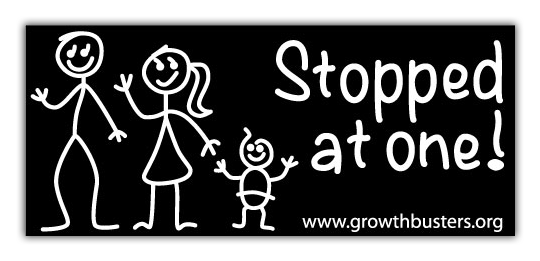
Overpopulation
Population is a multiplier in the equation for finding a sustainable balance on the Earth. The more people there are, the smaller our economies must be and the simpler our lifestyles. The bigger our economies and lifestyles, the smaller our population must be.
The science is clear that the current combination of world population and levels of consumption are unsustainable. We are in the process of liquidating the planet’s resources and injuring the capacity of life-sustaining ecosystems. It’s safe to say the world is overpopulated, and it will continue to be until we can say that we have achieved sustainable equilibrium.
World population reached 7 billion in 2011, and kept on growing. Some estimates have world population reaching 11 billion near the end of this century. Scientific estimates of the population the Earth can sustainably support range from under 1 billion to 5 billion. It all depends on how simply we live (in other words, how much we in the developed world are willing to curb consumption and contract our economies).
The good news is that overpopulation is solvable. We can, and must, voluntarily and dramatically reduce births so that total numbers drift back down to a truly sustainable level. By averaging 1.5 children, total world population would – instead of rising to 11 billion – decline to about 5 billion by 2100. A one-child average would reduce total population to below 3 billion – cutting our total human consumption by more than half from its current levels.
Around the world, people are demonstrating a preference for smaller families and are choosing that path. We simply need to accelerate that progress by raising awareness that the world is overpopulated, supporting access to family planning services, and supporting the right of women to determine when and if they conceive children.
Most advocates of sustainable population levels believe reducing population is just part of the work needed to bring our civilization into sustainable equilibrium. For the wealthiest populations, reducing consumption, contracting our economies (degrowth), and eventually reaching a steady state economy are also essential. But attempting to curb consumption and “green” our practices while ignoring population growth is like stepping on the brake while keeping the accelerator pressed to the floor.
Today many cities, states, territories and nations welcome and even pursue population growth. Some openly admit they link population growth with economic growth. Nations with declining population are attempting to increase low fertility rates in their obsession with economic growth. It’s difficult to imagine a sustainable world full of communities with such unsustainable goals and behaviors.
The documentary, GrowthBusters, explores the beliefs and propaganda that fuel these attitudes and policies. In many cases they are perpetuated by the elite growth pushers, those who profit from growth.
FOR MORE INFORMATION
NOTE: These links are provided to help you access more information and explore a variety of perspectives. We can’t possibly agree with everything posted on all these websites or written in every book we mention. Listing here is not an endorsement.
Please e-mail davegrowthbusters.org to suggest additions to this list.
Global
National
Regional
Local
FOR YOUR BOOKSHELF