Stanford biologist Paul Ehrlich reflects on more than 50 years of effort to educate the public about the unsustainability of endless economic and population growth.

Monthly
One-Time
Alternative Amount
Snag a Small Family
Window Sticker

Sign A Check And

Stanford biologist Paul Ehrlich reflects on more than 50 years of effort to educate the public about the unsustainability of endless economic and population growth.
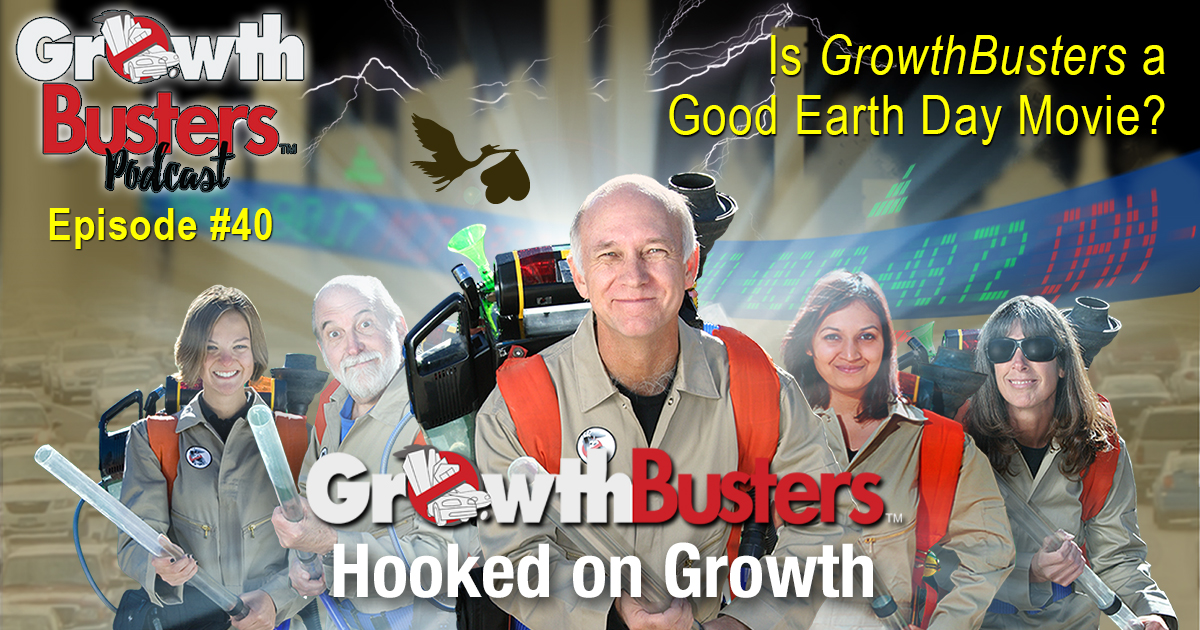
8 Years Later, Community Screenings Still Strike a Nerve
The documentary, GrowthBusters: Hooked on Growth is guaranteed to provoke conversations. Over eight years after it originally premiered, it’s still being screened. Is it still relevant? What kind of conversations does it spark? After he first watched, famed Stanford biologist Paul Ehrlich wrote, “This could be the most important film ever made.”
You may want to screen the film in your community around Earth Day this year.
It sparked such a spirited discussion as part of an Earth Day screening attended by filmmaker Dave Gardner in 2019, that he invited one of the audience members to join him in the studio to discuss his response. This conversation was recorded nearly a year ago; it just kept being pushed aside as more time-sensitive topics and guests arose. Finally, we’re sharing it now. Erika had not yet joined the podcast when we recorded this.

On a full planet, where human civilization is already in overshoot and in the process of crippling life-supporting ecosystems, it’s unfortunately not possible for the world’s poor, en masse, to rise out of poverty and live as richly as the even the average family in the industrialized world. There’s not enough biocapacity for 8 billion people to live high on the hog, and technology has not changed that. But “reputable” economists and technology Pollyanna’s like Andrew McAfee routinely fail to recognize this.

According to the four scholars who wrote A Finer Future, we are already experiencing some of the dramatic changes our system must undertake in order for our planet to meet the needs of future generations. This episode features a conversation with L. Hunter Lovins about the wellbeing economy and how sustainable behavior makes good business sense.

 More and more young women are declaring their intention not to conceive children. BirthStrike, Conceivable Future and Alexandria Ocasio-Cortez have all made headlines on this point. Erika and Dave unpack the issues surrounding womanhood without motherhood in this conversation with the author of the new book, Childfree by Choice, sociologist Amy Blackstone.
Amy is a professor of Sociology at the Margaret Chase Smith Policy Center at University of Maine. Her research into the childfree choice has appeared in a variety of academic and media sources including the New York Times, National Public Radio, and other national, regional, and international outlets.